
Can you help my child?
Almost certainly.
Tell us what you’ve noticed. We assess concerns about autism, attention, speech and development every day.
My child is just not making progress.
“A child who is not improving is a child
who has not been fully investigated.”
Dr Lilya Chub, Medical Director
We were told nothing more can be done.
We hear those words far too often. We take them seriously.
They are where our work often begins.
Do you only see children?
No.
We also care for adults with mystery, undiagnosed and untreated conditions.
What does functional medicine mean for me or someone I care for?
We work like medical detectives.
We listen to what you’ve noticed, whether it’s happening to you or someone you care for. We look for clues in how the body’s systems work together.
Where do you start?
With the whole person.
Holistic physicians, one multidisciplinary team:
neurology, immunology, the gut-brain axis,
and beyond.
Do you just manage symptoms?
No. We look for what is causing them.
Medical care built on investigation, not labels or assumptions.
How will we be treated?
Every patient is a valued guest,
and a partner in their own healing journey.
Who comes to Hope?
Guests from more than twenty-five countries.
Hope, it seems, travels well.
Why do you do all this?
Every guest deserves an answer.
For children and adults left with a diagnosis but no way forward, or told nothing more can be done, one question drives us: what else might help?
Hope Health & Healing
The Science of Hope.
The Practice of Healing.
Everyone deserves hope and the care that gives healing a chance.
On this page
Find the right care
See how Hope works
Decide what’s next
Our approach
Our approach to care in Dubai
Whether you come for yourself or for your child, we start with what you’ve noticed in daily life. Sometimes you sense a change before you can put it into words. That’s enough to start a conversation.
You can book your first appointment at Hope without seeing another doctor or having tests first. If you already have test results or letters from a doctor, bring them so we can review them with you.
That’s the starting point for functional medicine at Hope: we look at when things changed, what has already been tried and which symptoms might be connected. Then we talk through what to do next.
Speciality 01
Autism and concerns about speech or development
Perhaps your child doesn’t always turn when you call their name, uses fewer words than you expected, or finds it hard to join in other children’s games. Everyday sounds or changes in routine may be upsetting.
No single sign tells you whether a child is autistic. We listen to what you see at home and nursery, assess your child’s development and explain what support or further assessment could help.
Speciality 02
Unexplained symptoms in adults
Your tests came back normal, but you still don’t feel right. Perhaps your hands keep going numb, or your joints swell for no clear reason. Your own concern may be quite different.
If you’ve felt dismissed, tell us what keeps happening and how it affects your day. Your doctor reviews the pattern and your results with you, then explains what’s worth investigating next.
Speciality 03
Immune and inflammatory conditions
You may have recurring infections or an autoimmune condition such as Hashimoto’s thyroiditis, rheumatoid arthritis, coeliac disease or lupus.
Professor Hala Kamal, our consultant clinical immunologist, helps guide assessment and treatment. Professor Hiba AbuGabal, our consultant neurologist, can advise when symptoms involve the nervous system.
A reaction to food, medicine or supplements raises a different question: could it be an allergy? We ask what happened and how soon. For a suspected food allergy, a skin-prick test may help identify the trigger.
Sudden changes in your child’s behaviour? Read our guide to PANS and PANDAS.
Speciality 04
Nutrition, gut health and intravenous therapy
The helpful bacteria in your gut microbiome do more than help you digest food. They help regulate inflammation and play a part in how your gut and brain communicate. A course of antibiotics, for example, can upset that balance.
Your doctor and clinical dietitian look at whether you’re absorbing the nutrients you need from your diet. Our immunologist can advise when needed.
If tests show a deficiency and supplements aren’t being absorbed, supervised intravenous treatment may help. One example is iron given by intravenous infusion.
Read when iron may be given by infusion rather than as a supplement.
Specialist care
What we specialise in
For adults. We investigate symptoms that persist without a clear explanation.
For children. We assess concerns about speech, development and everyday health, with or without a diagnosis.
These are examples. If your concern is different, tell us what you’ve noticed.
Hope Health & Healing Medical Center · Dubai
You know something isn’t right.
Perhaps your symptoms keep returning, or your child isn’t making the progress you hoped for.
Dr Lilya brings together specialists in neurology, immunology and nutrition to investigate what’s happening and explain what could help.
Film library
We’d rather show you what we do than try to persuade you. So we filmed everything. If we’re your kind of clinic, come and meet us. If not, that’s fine too.
A child with a diagnosis but no progress. Symptoms that persist even when tests come back normal. Advice from every direction, but no clear explanation.
The films show you how our team works together under one roof. One boy’s story follows his journey from silence to a mainstream school desk and fluency in three languages.
Watch all six films or choose the one that speaks to you. You can also read the boy’s story on our website in Understanding the Mind in the Making, our illustrated guide to autism and child development. From the same page, download the guide as a PDF with academic references, or choose the EPUB e-book for your digital reader.
All six films are free to watch now. No forms, no email address. In about 38 minutes altogether, they explain how we investigate symptoms, what treatment can involve and what care at Hope can look like for a family. Each film is in English with Arabic subtitles.
If you recognise something of your own experience or your child’s, come and see us. You can book a consultation to talk it through.
The clinical team
Dr Lilya and the clinical team
Dr Lilya Chub, Hope’s founder and Medical Director, leads the clinical team. She is licensed by the Dubai Health Authority.
She is board-certified in family medicine and neurology and has nearly three decades of international experience leading departments of emergency medicine, neurology and internal medicine.
Dr Lilya specialises in the diagnosis and treatment of neurodivergent children, and in integrative functional medicine for complex and chronic conditions, the so-called ‘mystery’ illnesses.
A consultant immunologist, a consultant neurologist and a clinical dietitian work with Dr Lilya. Both consultants are professors in their fields. At case review meetings, each subject matter expert contributes to a shared view of what the findings mean.
“When others say, ‘there is nothing more that can be done’, our work is often just beginning.”
Dr Lilya Chub, Medical Director
We work across conventional medicine and integrative therapies to diagnose and treat health problems that can go unrecognised in autistic children, children with developmental or speech delays, and adults with persistent symptoms.
We explain what the findings mean for you or your child, including where the picture is still uncertain.
Our commitment
Our Commitment to You and Your Family
What we hold ourselves to:
Medical treatment, not just management. When an autistic child develops a new health concern, we investigate it in its own right. We take the same care with unexplained symptoms in adults.
Root cause investigation. We recommend further tests when they could explain your symptoms or change your care.
The whole person. We consider how the brain, gut and immune system work together, and how nutrition and daily life affect you.
Honest medicine. We tell you what we find, what we can treat, and what we cannot.
28+
Years of international clinical experience
5,000+
Guests welcomed
25+
Countries represented
The Hope approach
Functional and integrative medicine in Dubai: what makes Hope different?
One medical team looks at the whole picture with you. The aim is simple: understand what is happening and decide what will help next.
Return to what we specialise in. If you are travelling to Dubai, our guide for international guests explains how to plan your visit.
-
No single sign tells us it’s autism. Tell us what you’ve noticed, especially if your child has lost words. We’ll assess how they communicate and help you find ways for them to tell you what they need.
-
Which infections have occurred, how often and how severe they were
How you or your child recover between infections
What earlier tests or treatment have shown
Whether to involve our consultant clinical immunologist
-
When sleep changed and what a typical night looks like
What seems to wake you or your child: pain, itching or something else
Any recent changes in routines or medicines
Whether the history points to a particular examination or test
-
Comprehensive blood chemistry (to check blood sugar and see how well the liver and kidneys are working)
Organic acids testing (to look in urine for signs of certain inherited conditions that affect how the body breaks down food)
Genetic analysis (to look for a change in a gene that might explain the symptoms)
Brainwave monitoring (to record the brain’s electrical activity when a seizure is suspected)
-
We start with what has changed in daily life. If your child is struggling to sleep, or you feel unsteady on the stairs, we ask when it began, what else changed and what previous tests have already told you.
We look for connections without assuming the symptoms share one cause.
-
Dr Lilya Chub leads your medical assessment. At our case review meetings, she and her colleagues discuss your care together.
Professor Hala Kamal, our consultant clinical immunologist, Professor Hiba AbuGabal, our consultant neurologist, and our clinical dietitian each bring a different perspective. Together, they consider what might explain your symptoms and agree on the next steps to recommend.
That is what integrative care means at Hope. We explain what the team thinks, what remains uncertain and why we recommend each step.
-
A diagnosis can tell you the ‘what’, but not necessarily the ‘why’. If your autistic child starts waking through the night or finds it hard to eat foods they used to enjoy, knowing they are autistic does not, on its own, explain what has changed.
We take that change seriously. We listen to what you’ve noticed and look for possible medical explanations, alongside the therapies and support that are already helping your child.
-
Tell us what has been happening and bring any results or letters you already have. If you have none, that’s fine. We piece together what you’ve noticed, what earlier investigations have shown and which questions remain unanswered.
We look beyond the ‘what’ to ask why this might be happening and what we can do to help. If a further examination, test or specialist opinion could clarify the picture or change your care, we follow it up. If further tests are unlikely to help, we explain why and discuss what you can do next.
-
Whether we’ve assessed you or your child, we explain what we found and what it means. If treatment or a change in diet could help, we talk through the options and agree together where to start.
Sometimes the best next step is to wait and see whether a symptom settles. If so, we agree what to look out for, when to meet again and what should prompt you to get in touch sooner.
That is what holistic, whole-person care means at Hope. Test results are only part of the picture. We also ask what a better day would look like for you or your child, so the plan reflects what matters most.
Care in practice
Examples of Services That Transform Lives
Your care, step by step
From assessment to treatment
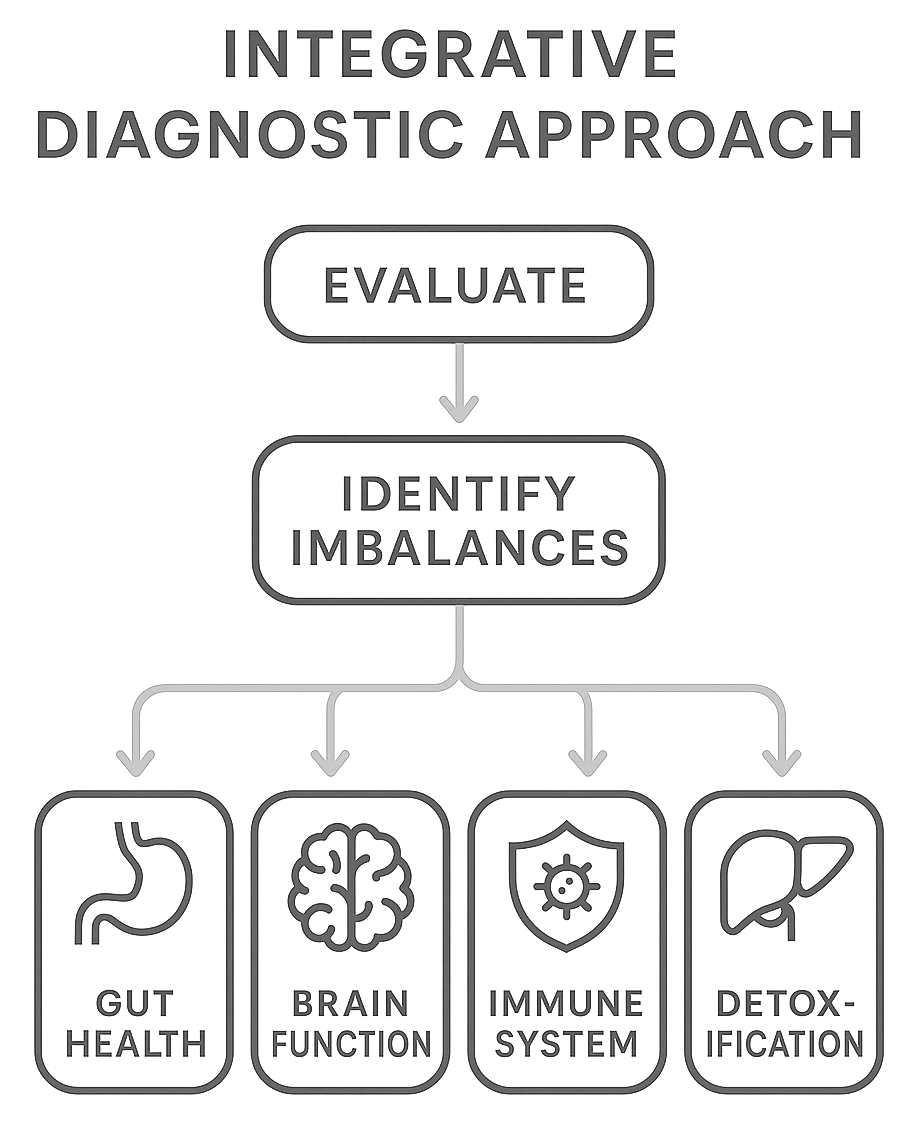
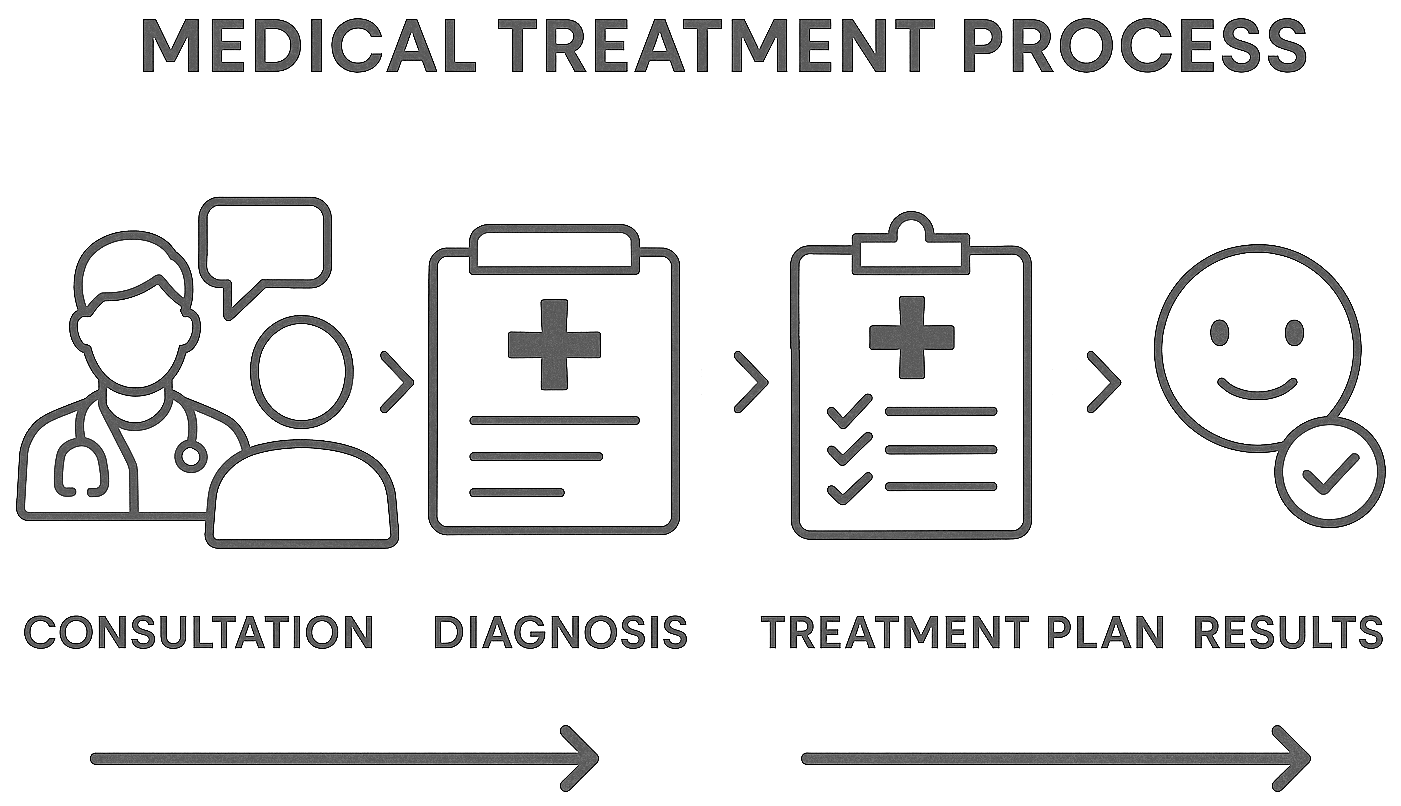
Two views of your care. Select a diagram to read it at full size.
Investigation · 01
Our integrative diagnostic approach
How symptoms, history and findings guide the investigation.
Treatment · 02
Our medical treatment process
From your consultation to a treatment plan and review.
Who is the assessment for?
Choose the guide that explains what a first assessment involves.
Share this page
If someone you love is still searching for answers, send them this page.
You don’t need to write anything. Email, WhatsApp, Telegram and X include a note you can edit or send as it is. Facebook and LinkedIn start with just the link.
Nothing is sent unless you choose to send it.
Could these be early signs of autism?
Every child is different. A few examples you might recognise:
You call their name. They rarely turn.
They spot a dog but rarely point to show you.
They used to say “more”. Now that word has gone.
When infections keep returning
Your child has barely settled back into school after one ear infection when another starts. We review how often this happens and how well they recover before deciding whether to check their immune system.
When sleep is disrupted
Waking up scratching is just one example. For you or your child, it might be a night-time cough, pain or lying awake for hours. We talk through a typical night with you to decide what to check next.
When earlier tests leave questions
We start with any results you already have. If a question is still unanswered, we explain what another test could tell us and whether the result would change the next step for you or your child.
Your next step
Start with the films, or start with a conversation.
You can watch the films without booking or giving us your details.
If you’d rather talk, your first consultation takes an hour. We start with what has brought you to Hope, whether you’re coming for yourself or your child.